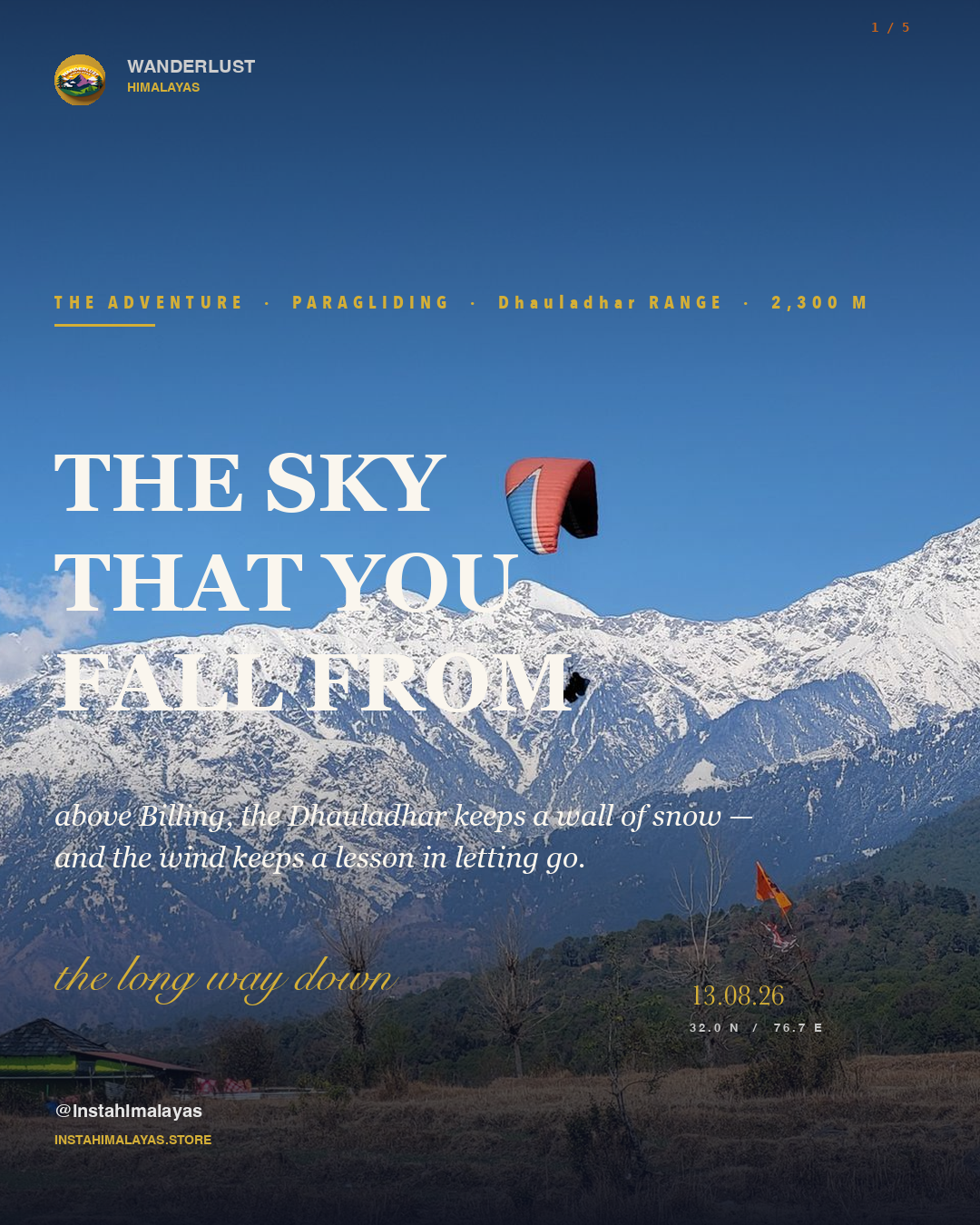
Two kilometres of vertical drop. A north-westerly wind that holds steady for nine months of the year. And a small Himachali town that turned all of it into the world's longest tandem flight. Above Billing the Dhauladhar keeps a wall of snow, and the wind keeps a lesson in letting go.
Two kilometres of vertical drop. A north-westerly that holds for nine months of the year. The world's longest tandem flight.
— Field Notes, 14 August 2026
Where this sits
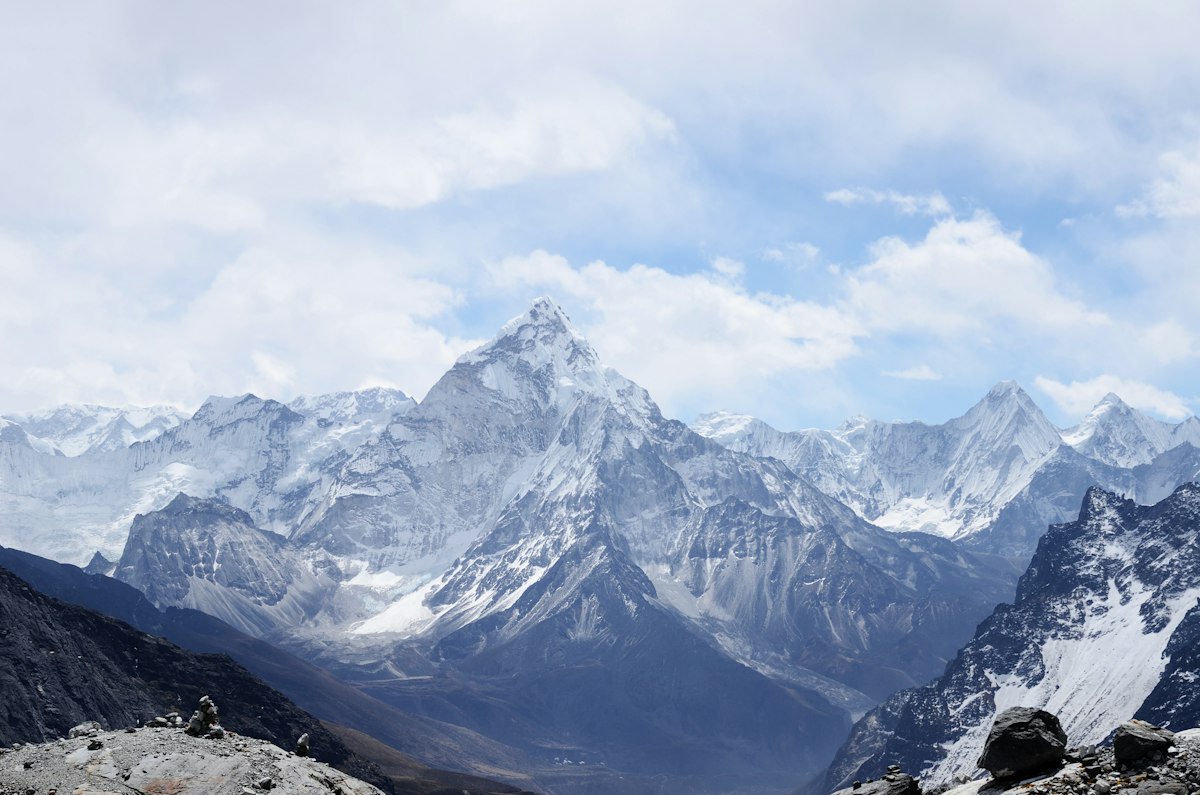
Bir Billing isn't the highest paragliding site in the country. It just does it best. The launch is at Billing — 2,300 metres above sea level, on the edge of the Dhauladhar. Landing is forty minutes later and fourteen kilometres away, on a grassy meadow in Bir. Above you: a wall of snow peaks that most pilots never get bored of. On a clear day, the take-off looks like a runway suspended over the foothills — a green ribbon of meadow ending abruptly at sky.
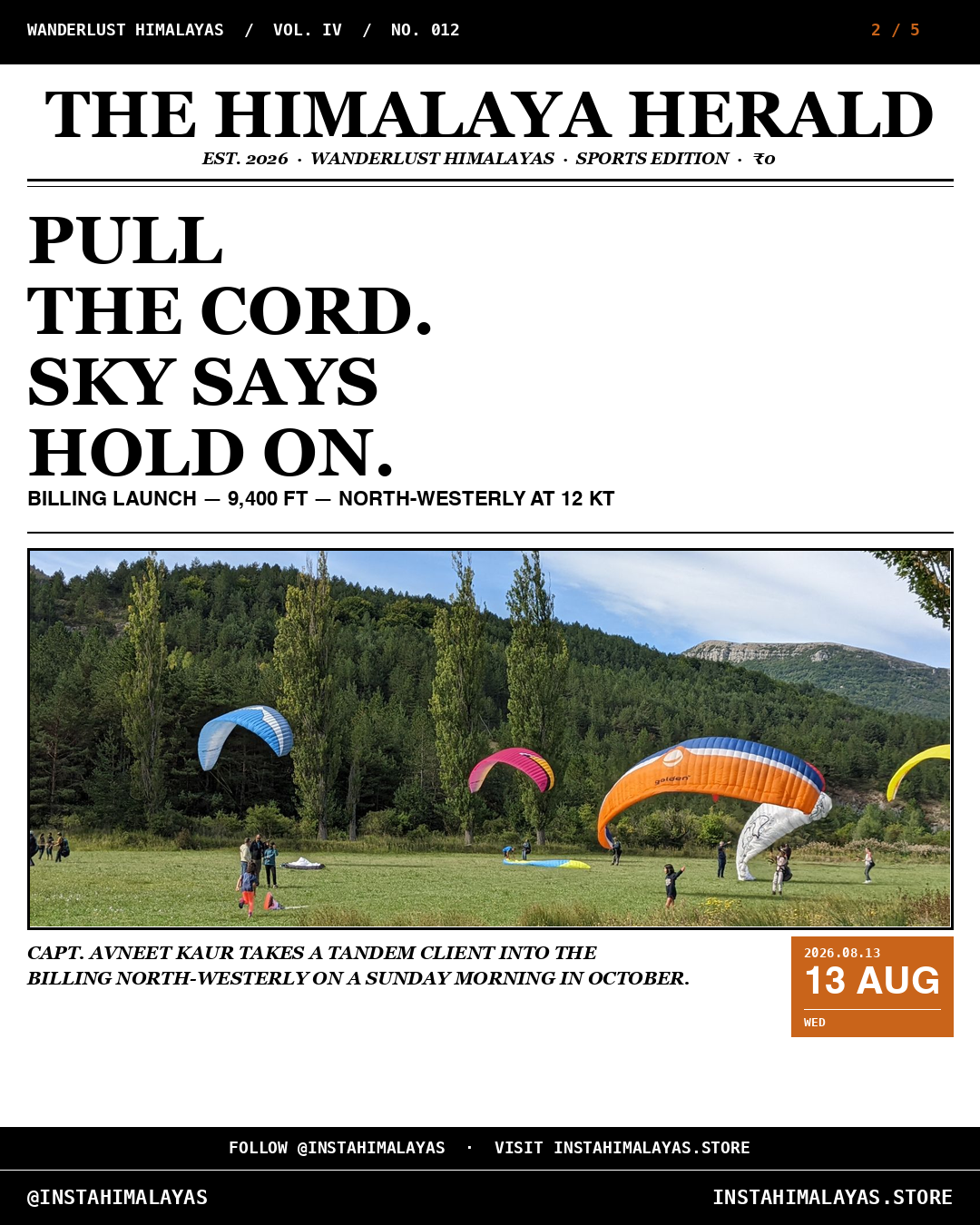
Tandem or solo — which flight is right for you?
If you are visiting Bir for the first time, you fly tandem. A certified Paragliding Association of India (PAI) pilot sits behind you and does everything. You sit strapped in front of them for twenty minutes of pure adrenaline — the take-off is the loudest ten seconds of the day. A tandem runs INR 3,000-4,000 in 2026. If you intend to fly solo, you sign up for the eight-day P1 course. The course covers forty flights, ground school, and weather reading. Most P1 students land out at least twice during training. The mountain teaches patience before the jump.

The numbers — Dhauladhar, elevation, glide
Bir Billing runs at 2,300 metres on a north-westerly that blows at twelve knots or less from October through June. The sweet months are October-November and February-March — wind steady, thermals gentle, snow visible on the higher Dhauladhar peaks. July through September is the wet window: cloud, no flyable days, terrain risk. Fly in October or wait until March.
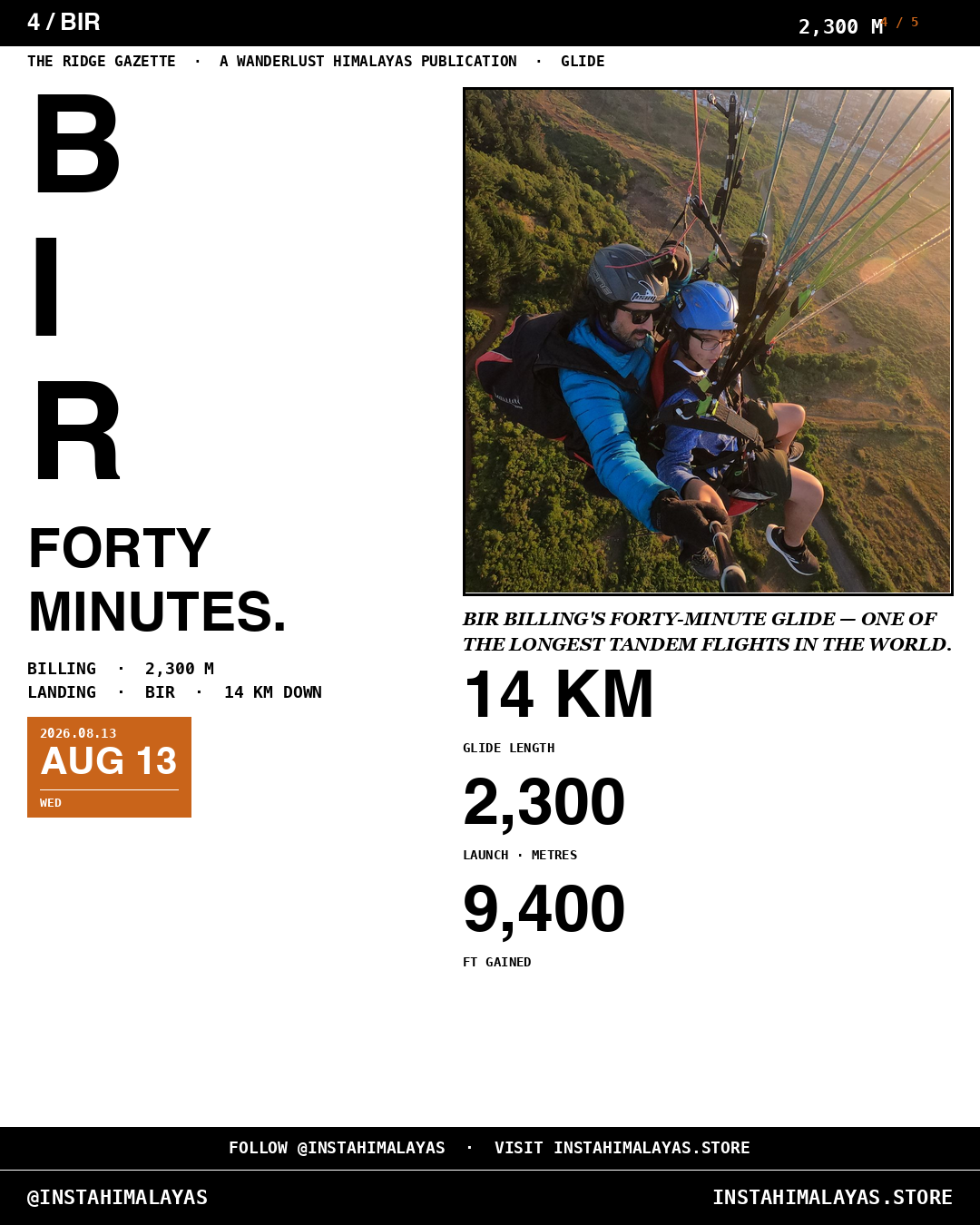
What the locals know — Billing, Bir, and the long way down
Billing is the launch village. Bir is where you land. Most pilots live in Bir, not Billing, because Bir has guesthouses, cafes, and the Tibetan community that runs the monastery. The long way down gives you forty minutes of flight. Most first-timers realise halfway through that this is not a thrill ride — it is a quiet, deep survey of a single ridge system, drawn out under silence.
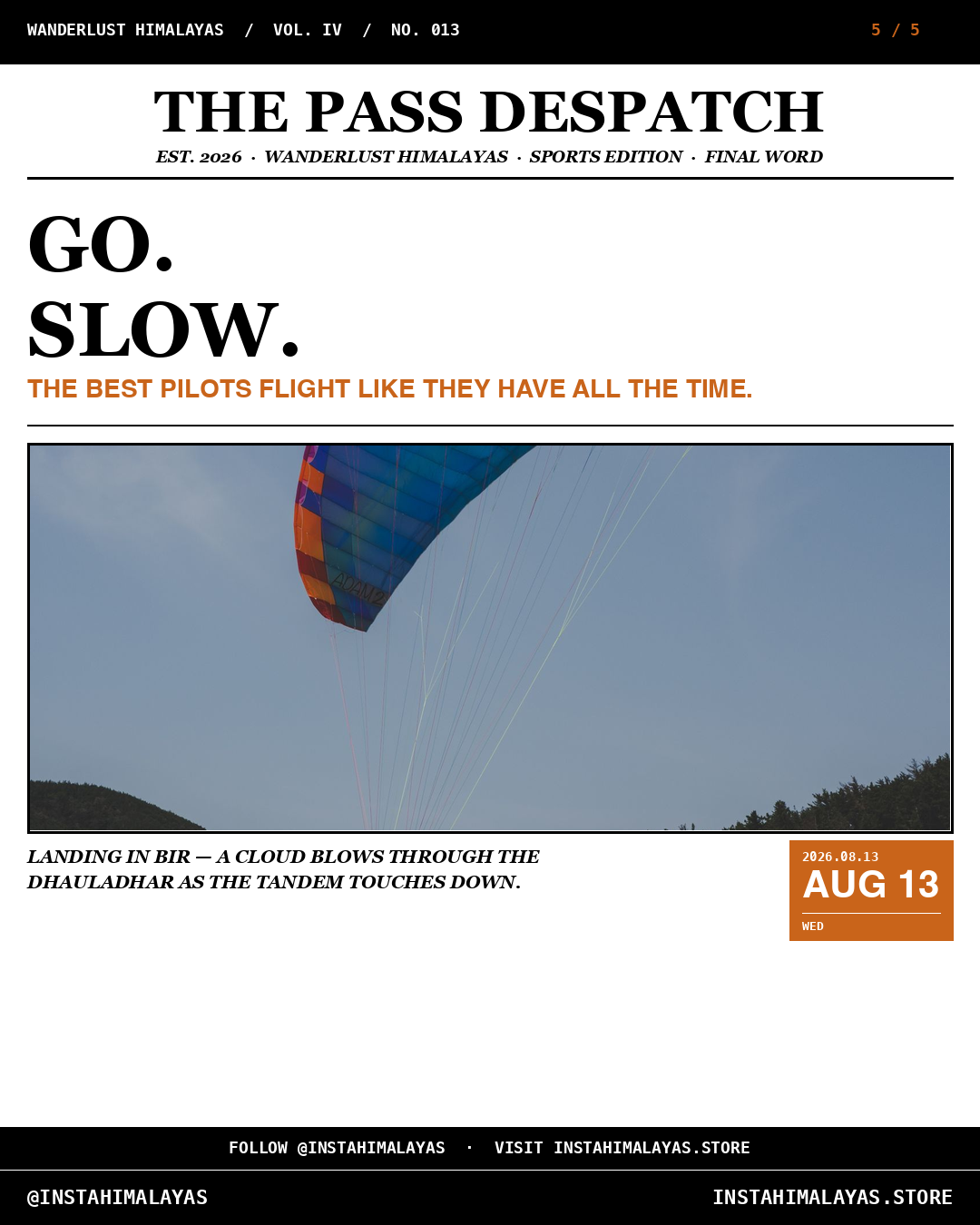
When to go — and when not to
Book in October or March. Pack a light down jacket — even at 2,300 metres in the morning sun, the air is sharp. If you want to also walk, do the Rajgundha trek (overnight at the meadow, return to Bir next day) — it shares the same ridge the glider flew over.
What to bring back — slow down the way home
Three things are worth carrying from Bir. First: a PAI instructor's card if you flew tandem. Second: a printout of the day's glide path on an aviation chart. Third: a cup of the local Tibetan butter tea at the camp near Chowki. The image burned into the camera is not the memory. The cold mountain air, the butter tea, the long way down — that is.

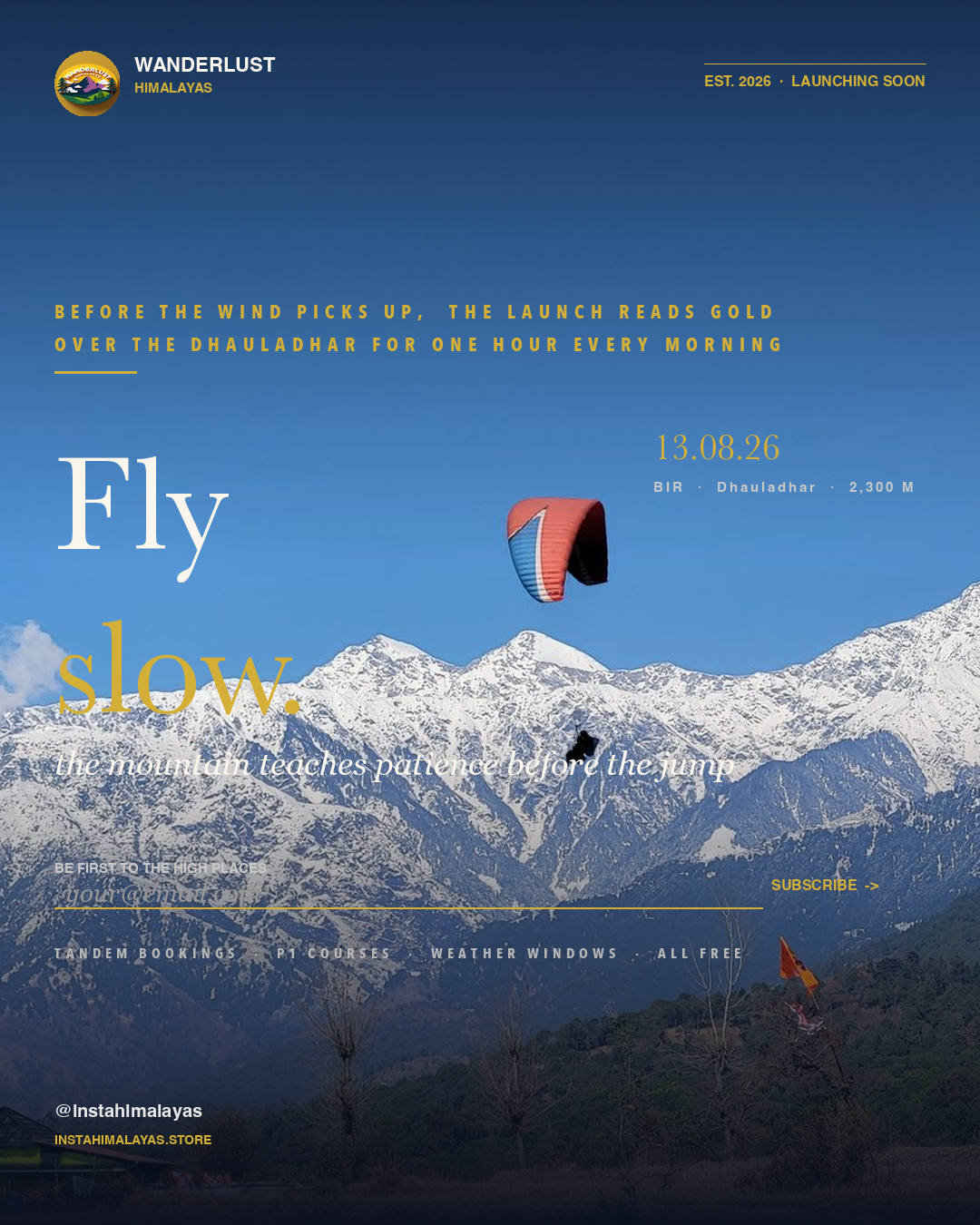
The trail forward
One day, three slots, one field guide. Subscribe at instahimalayas.store and follow @instahimalayas for the daily climb.
Today's Instagram lineup
Everything from today's feed, slot by slot: