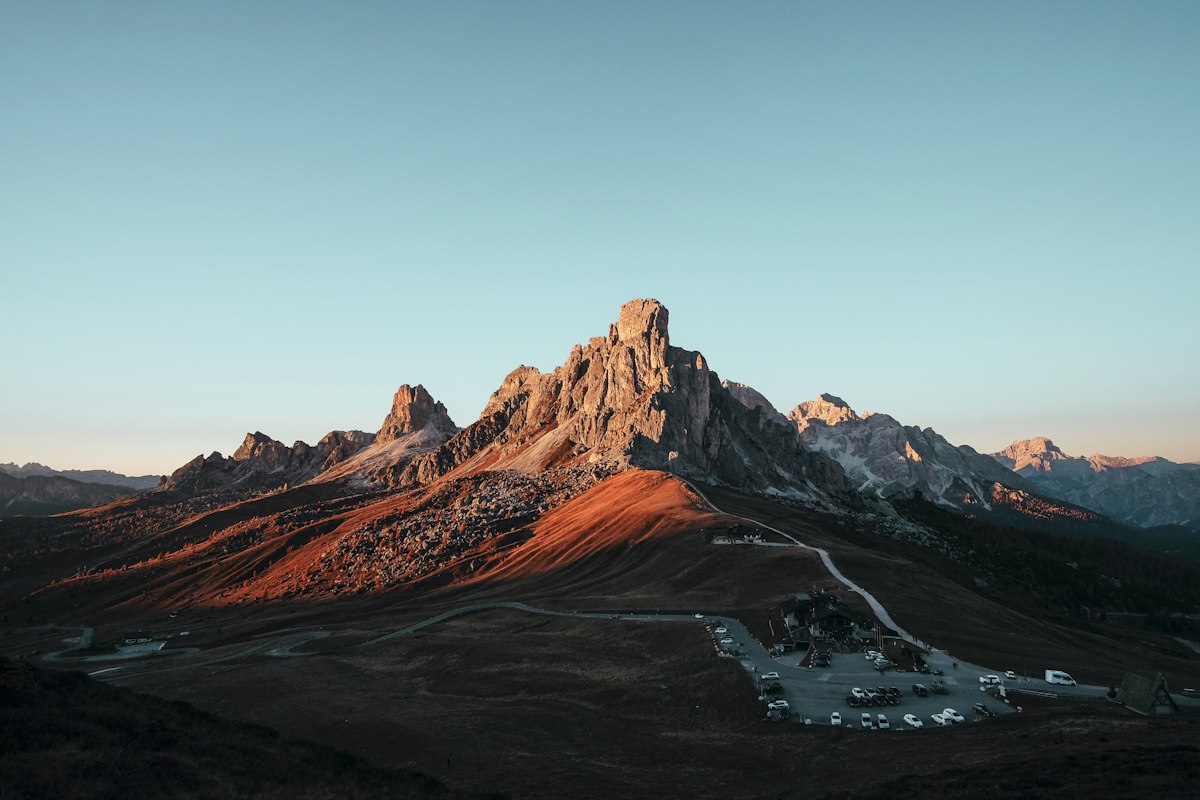
Everyone photographs Spiti's monasteries. Almost nobody tells you about the villages that hold them up — the places at 4,300 metres where people have lived for centuries, through winters that touch −30°C and summers that last six weeks. Komic, Langza and Hikkim sit close together on a high plateau above Kaza, and together they are one of the most extraordinary inhabited places on the planet.

Komic — the highest village in Asia
At 4,587 metres, Komic is officially listed as one of the highest villages in Asia. The claim is contested; the feeling is not. The village sits on a wide plateau with a small monastery at its top, and in winter the snow can bury the lower houses entirely. What makes Komic remarkable is not the altitude record — it is the fact that people simply live here, grow barley in the three-month summer, and keep a temple that has stood for centuries.
- Altitude: 4,587 m
- What's there: one monastery, one shop, a handful of families, silence
- Best time: June to October, when the road from Kaza is open

Langza — the village with a fossil in its fields
Langza sits at 4,300 metres, below the towering Chau Chau Kang Nilda peak. Its famous landmark is a large Buddha statue overlooking the village — but the real treasure is underfoot. The fields of Langza are full of marine fossils, remnants of the Tethys Ocean that once covered the Himalayas. Locals will happily sell you ammonite fossils, and the entire village operates on a rhythm that has not changed in generations.
- Altitude: 4,300 m
- The hook: marine fossils in the fields — the Tethys Ocean is underneath you
- The view: Chau Chau Kang Nilda (6,303 m) directly above the village

Hikkim — the world's highest post office
Hikkim is famous for a single, wonderful fact: it has the highest post office on Earth. At 4,440 metres, you can buy a postcard, have it stamped, and mail it to yourself — and it will arrive, because the postal service here actually works. It is one of the most charming acts of tourism in the Himalayas, and the postmaster is a local institution.
- Altitude: 4,440 m
- The hook: send a postcard from the world's highest post office
- Don't miss: the monastery just above the village, and the silence between everything

How to visit the three
All three villages sit within a rough 30-kilometre loop from Kaza, reachable in a single day by car or as a half-day on foot with acclimatisation. The usual route: Kaza → Komic → Langza → Hikkim → Kaza. The roads are jeep-worthy rather than car-worthy, so hire a local driver — they know the plateau and the weather.
- Acclimatise in Kaza first (3,650 m) for at least a day. These villages are higher than the town, and altitude hits fast.
- Go June to October. Winter closes the roads completely.
- Carry cash. There are no ATMs up here.
- Buy the fossils respectfully — they are the village's livelihood, but they are also irreplaceable records of the Tethys Ocean.
- Send the postcard. It is the whole point.

Why they matter
These villages are not tourist attractions in the normal sense — they are living proof that the high Himalaya is home, not just scenery. The barley fields, the fossil beds, the post office and the prayer flags all say the same thing: the mountains are not empty. They are inhabited, carefully, at the very edge of what humans can endure.
And the next time you see a photograph of Spiti, remember that the picture is held up by places like these — villages that never come down, and never plan to.