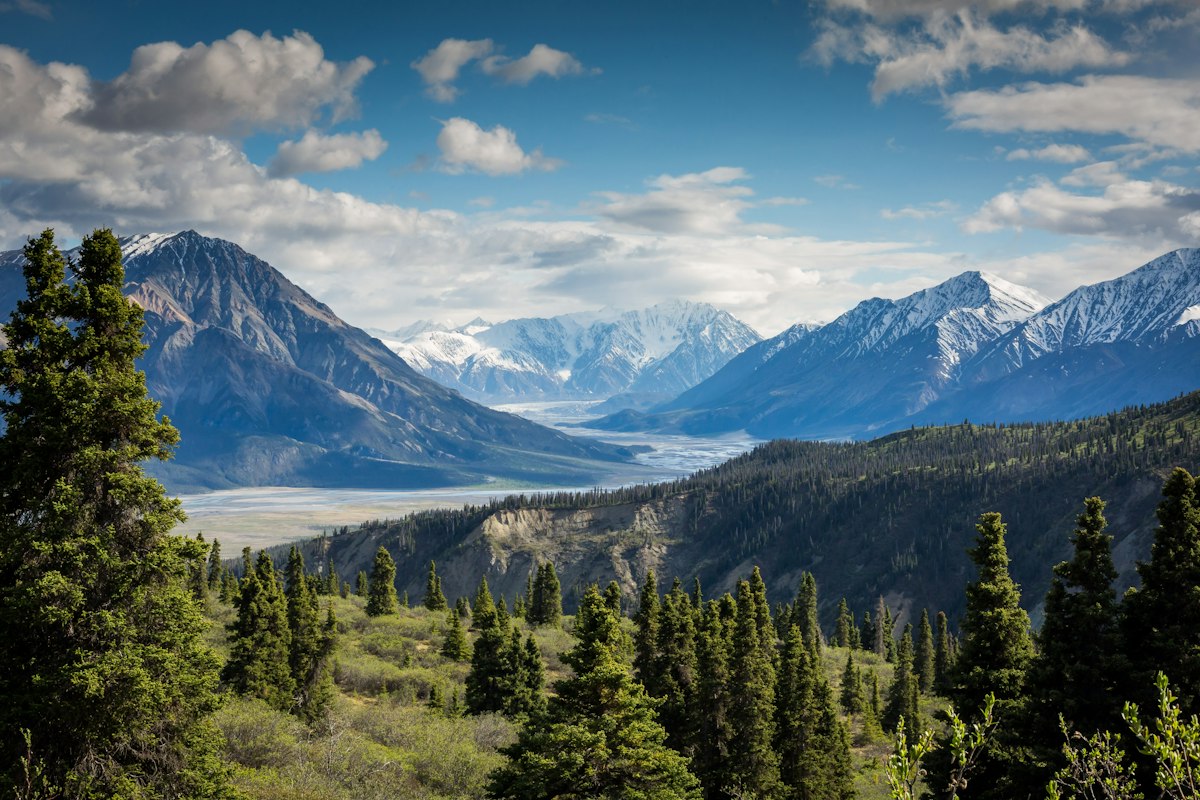
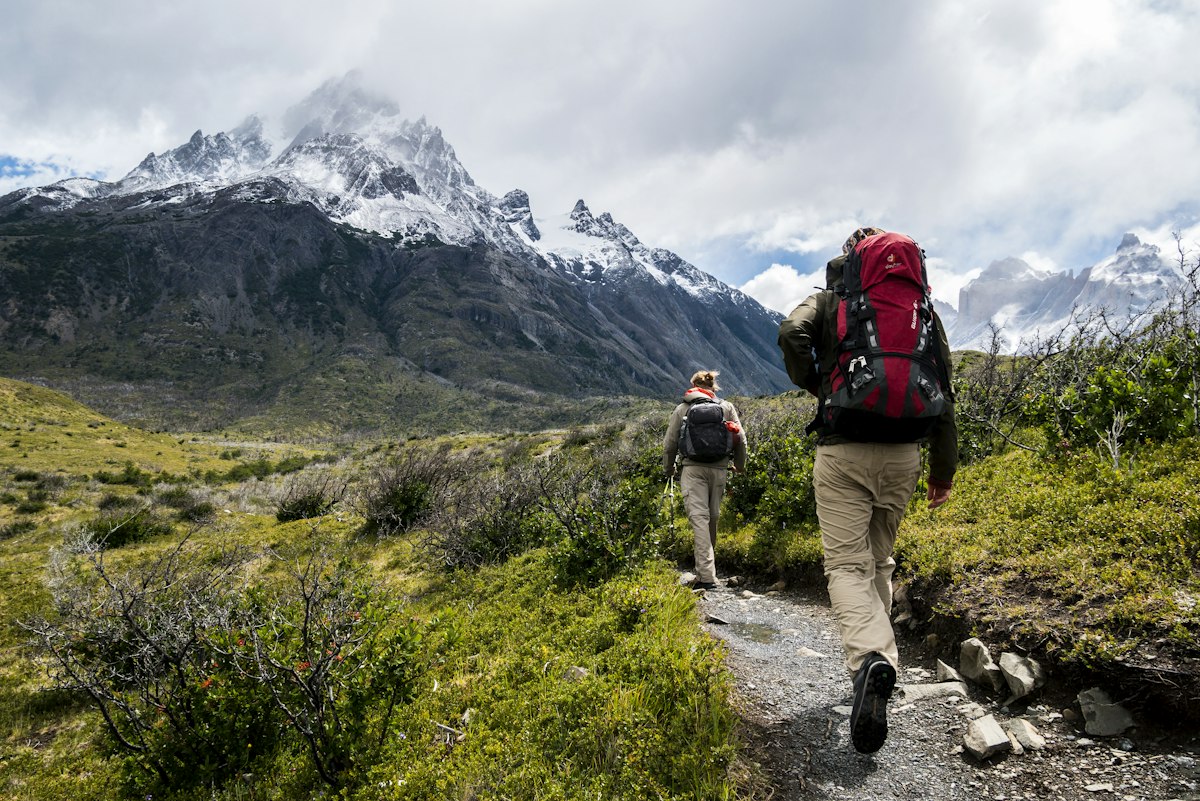
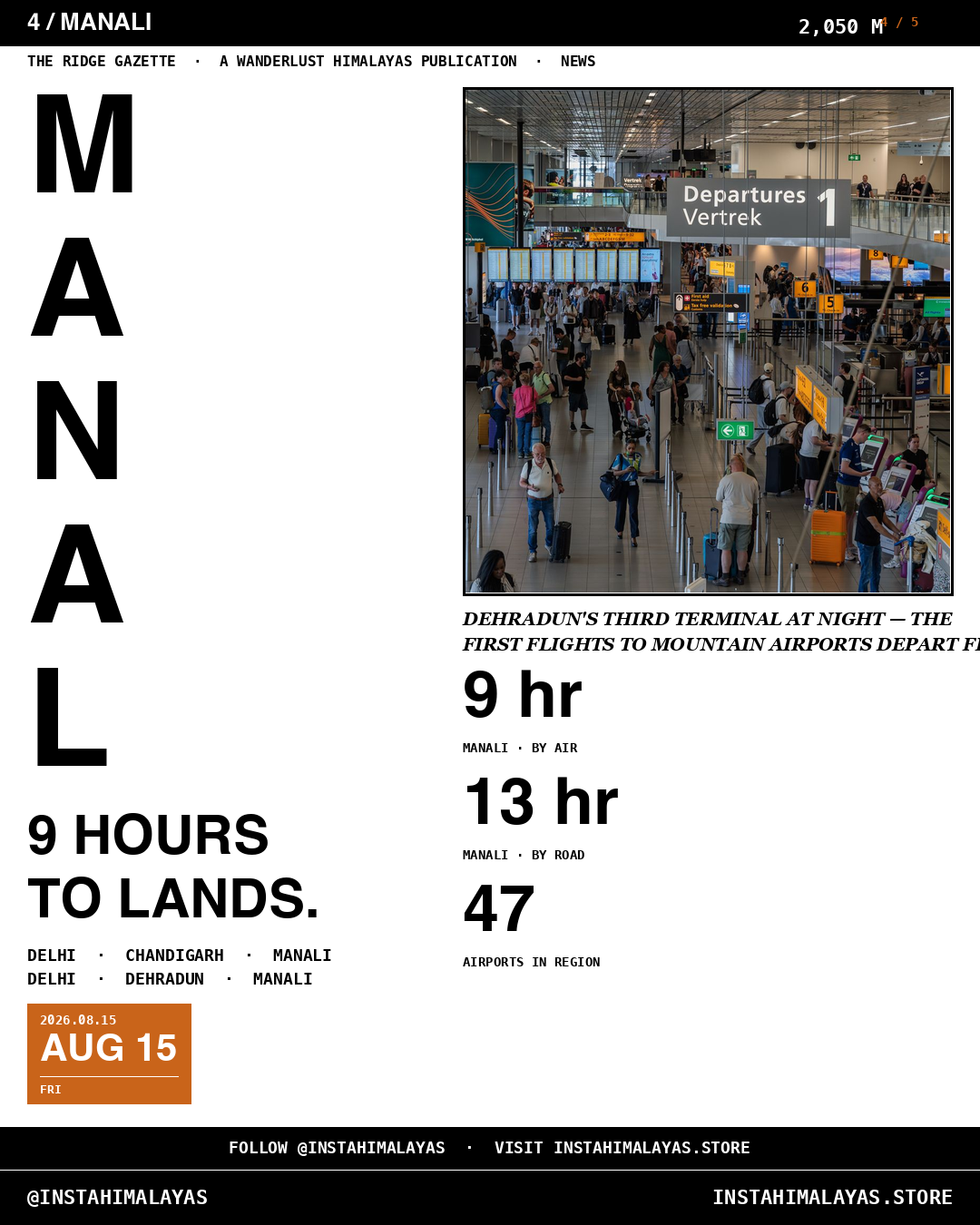
In late July, DGCA released its Winter 2026 schedule. Twenty-two new routes to airports you've never heard of — Pakyong in Sikkim, Kargil in Ladakh, Pithoragarh in Uttarakhand, Jolly Grant's expanded apron, Dehradun's third terminal. For the first time in commercial aviation history, Indian travellers can land at small Himalayan airports on a published schedule — not just a seasonal charter.
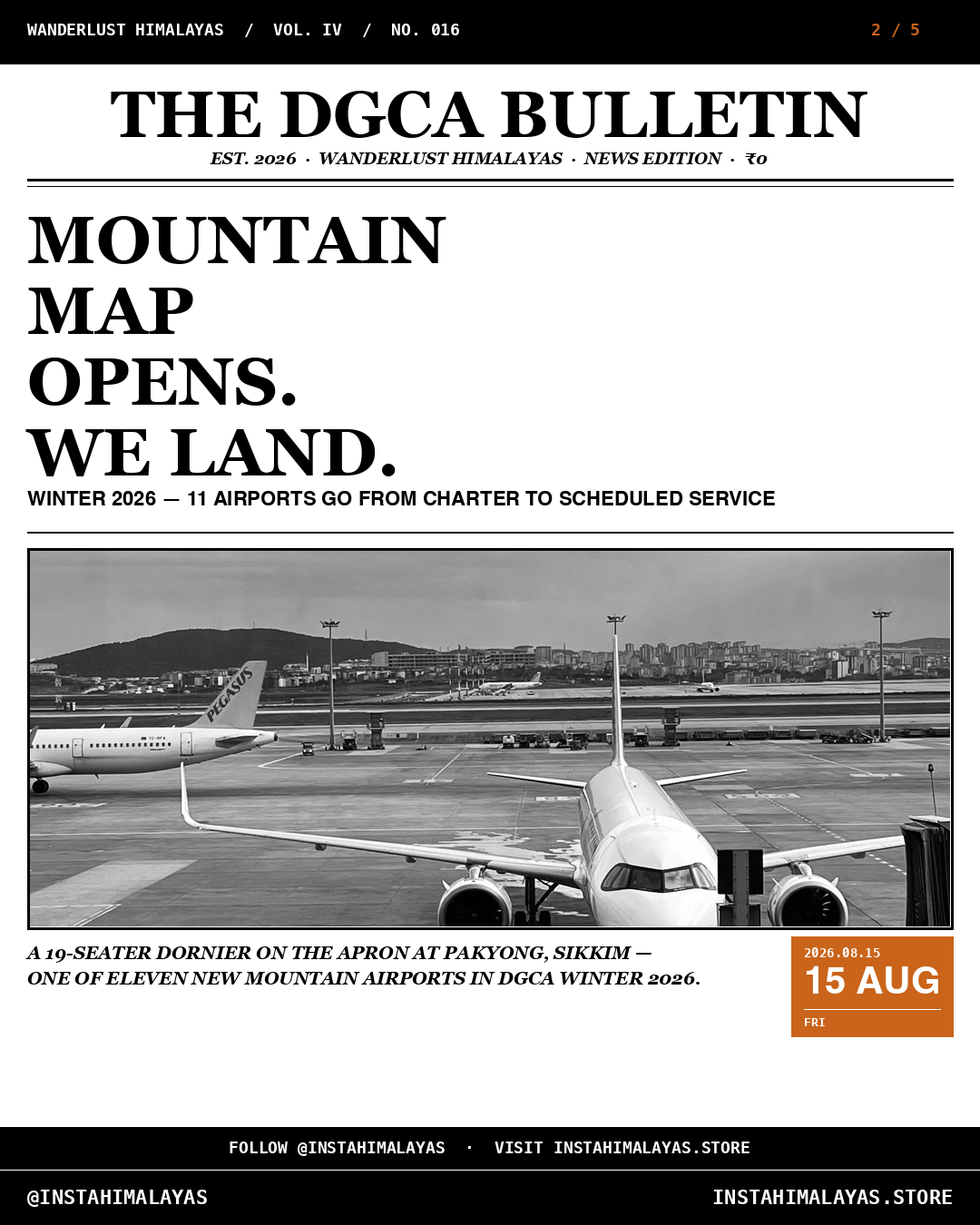
DGCA just opened the Himalayan map. Eleven new airports on a published schedule — Pakyong, Kargil, Pithoragarh, Jolly Grant and seven more.
— Field Notes, 16 September 2026
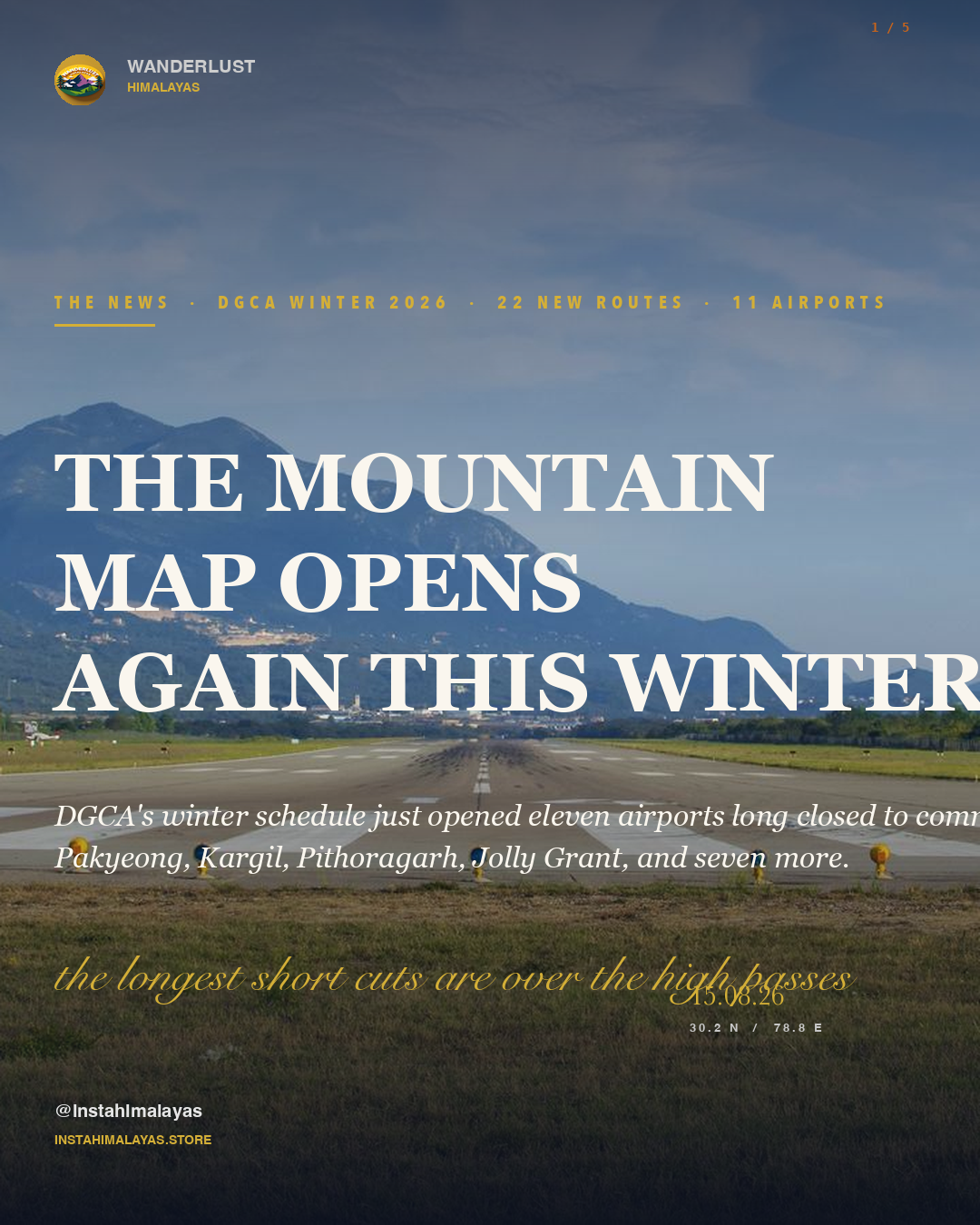
Where this sits — the eleven airports
Pakyong (Sikkim), Kargil (Ladakh), Pithoragarh (Uttarakhand), Jolly Grant (Dehradun, expanded), Dehradun third terminal, Bhuntar (Kullu), Shimla (new terminal), Pantnagar (Kumaon), Leh, Jammu, Pathankot — go from seasonal charter to scheduled service this winter. Some will fly daily, some thrice-weekly. All of them are accessible from at least one metro on a published schedule.
Fly in or drive out — which mountain trip is right for you?
If your week is tight, fly in. A Delhi-Dehradun-INR-1499 flight puts you 2.5 hours from the Garhwal hills, instead of a 7-hour overnight train plus 4-hour road. If your week is wide, drive out. A Manali-Leh over 3 days (475 km, 5 passes, 2 rivers, 1 cold desert landscape) is one of the great roads on the planet — a flight collapses it. The verdict is the same one we'd give for any geography-driven trip: fly in and drive out. Use the flight to land with a clear head; use the road to wear the route in.

The numbers — routes, airports, operators
Twenty-two new routes. Eleven new airports. Five operators (IndiGo, Alliance Air, SpiceJet, Air India Regional, TruJet). The first flight is October 29, 2026. The cheapest fare on the new schedule is INR 1,499 (Delhi-Pithoragarh). The route map increased from 47 published routes in winter 2025 to 69 in winter 2026 — a 47% expansion.
What the locals know — weather and altitude
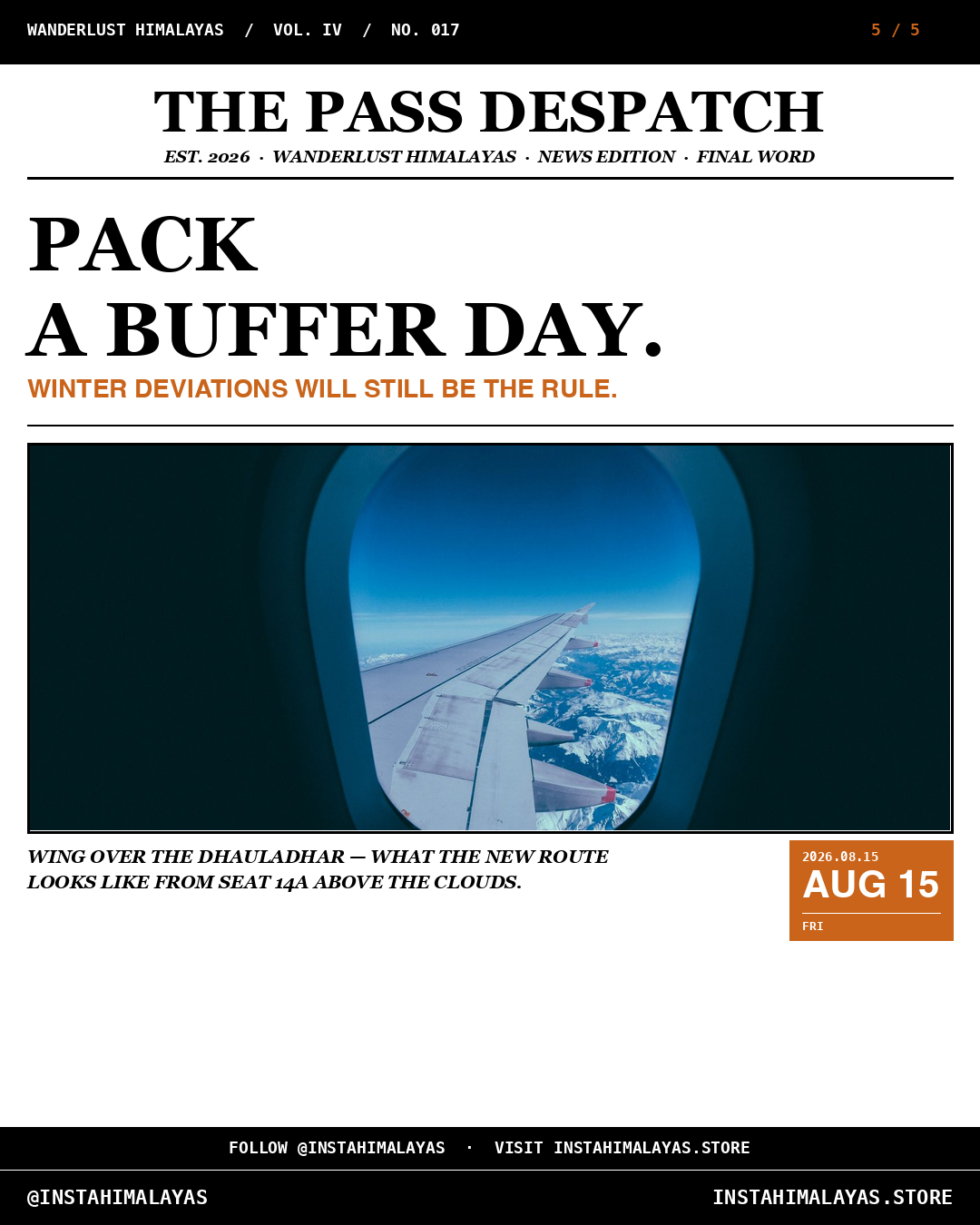
Mountain weather still rules. The DGCA schedule lists a flight; the diversion rate in winter at the high-altitude airports is roughly 12% — meaning twelve out of every hundred scheduled flights land somewhere else, or don't land at all. Always pack a buffer day. Always check the airline's snow-cancellation policy before you book. Always budget for one night on the ground at the destination airport that you might not need.
When to go — and when not to
October 29 launches the schedule. The winter window runs through mid-March. The Himalayan airports are weather-dependent — the worst month for diversions is January, when fog closes the plains at Delhi. If you have to fly during January, take the day-flight, not the early morning, and have one full buffer day on the return. If you can avoid January, do.
What to bring back — the schedule, and the buffer day
Bring the Winter 2026 schedule in your hand (or the MoCA web app). Bring an extra INR 6,000 in travel cash, because the small airports may not have 24/7 ATMs. Bring a backup plan — a buffer night in the city, and the patience to wait when fog closes the valley. What you bring back: a winter map of India that has more routes than any traveller in the past decade could have imagined.


The trail forward
One day, three slots, one field guide. Subscribe at instahimalayas.store and follow @instahimalayas for the daily climb.
Today's Instagram lineup
Everything from today's feed, slot by slot: